
I was walking down my street past the schoolyard that was once filled with children playing at recess to find pretty much the same thing. This time, it’s children learning how to ride a bike as part of a summer camp devoted to bicycle safety. It’s the second week of “summer” (i.e., school is out) and the schoolyard has been full every weekday. So, too has pockets of my neighbourhood park with children learning different things, having fun and enjoying summertime.
Summer camps — local, sleepover, or of the wooded variety — are a right of passage for many children. They are also, for many parents, a necessity. We don’t often like to say this, but school is as much a form of daycare for children from the ages of 4 through 17 years as it is anything to do with civic education, life skills preparation, or employment advancement.
It’s why this article in Fast Company by Ericka Sóuter struck me so much. Sóuter begins it with this:
Every June, the school year ends, and the framework that kept us afloat all year vanishes. If you’re lucky, your child is in camp. If you’re very lucky, camp goes past 3 p.m. And if you’re really lucky, it doesn’t cost as much as a mortgage payment.
This is what parents face this time of year. It’s not just summer though, every time a child has to attend a health appointment, feels unwell, or experiences difficulty getting to school, parents need to find ways to adapt. Bringing a child to the office isn’t often possible, and only in certain places, companies and roles can parents reasonably work from home. The alternative is to take a day off, use a “sick day” (if you have them), or something that can either deplete the options for vacations or leave a parent without pay for the day.
The costs of this — in real dollar value and social value within a work environment — are many. Not all parents can literally afford this.
Yet, it’s a reality for far too many families to face. When we design anything for health, are we designing for the families we had or have, the ones that we see represented in the playgrounds in the summertime or something else?
Designing for Seasonal Complexity

A massive mistake made in service design is the neglect of seasonal complexity.
Seasons — literal and social — are a part of living systems. Nearly every industry has its “busy seasons” or “slow seasons”, which place stresses on the resourcing — human and otherwise. Good companies design for this. What it means is also ensuring that the strategic planning and tactical implementation of our services require this kind of nuance when being created.
We do this in some ways, but often it’s about dialing up the same resourcing used for every context, rather than transforming the manner in which we deliver services in different contexts. For example, the overflowing waiting rooms in health clinics during cold and flu season, aren’t better served by simply adding more professional hours to the staffing. Yes, that helps, but it still means more bodies using more tools, services and supplies within a constrained (i.e., physical, digital, and organizational) context.
It’s the problem of creating a ‘standard model’ of design that we apply to every situation.
Consider an alternative. Gardening is a great example of designing for living systems that is complexity-sensitive. Great gardeners (or farmers) understand the work required for seasonal activity, whether it’s in planting, pruning, maintaining, or harvesting. The model means that gardening itself as a fundamental set of activities, outcomes, and processes is different depending on seasons and seasonal conditions, by design.
We use different metrics, measures and approaches to evaluating the success of gardens, using that data to inform whether we need to adapt or modify our tactics, and employ an overall strategy that is meant to account for seasons, not just specific times of the year. This is strategic design for living systems.
Panarchy and Seasons
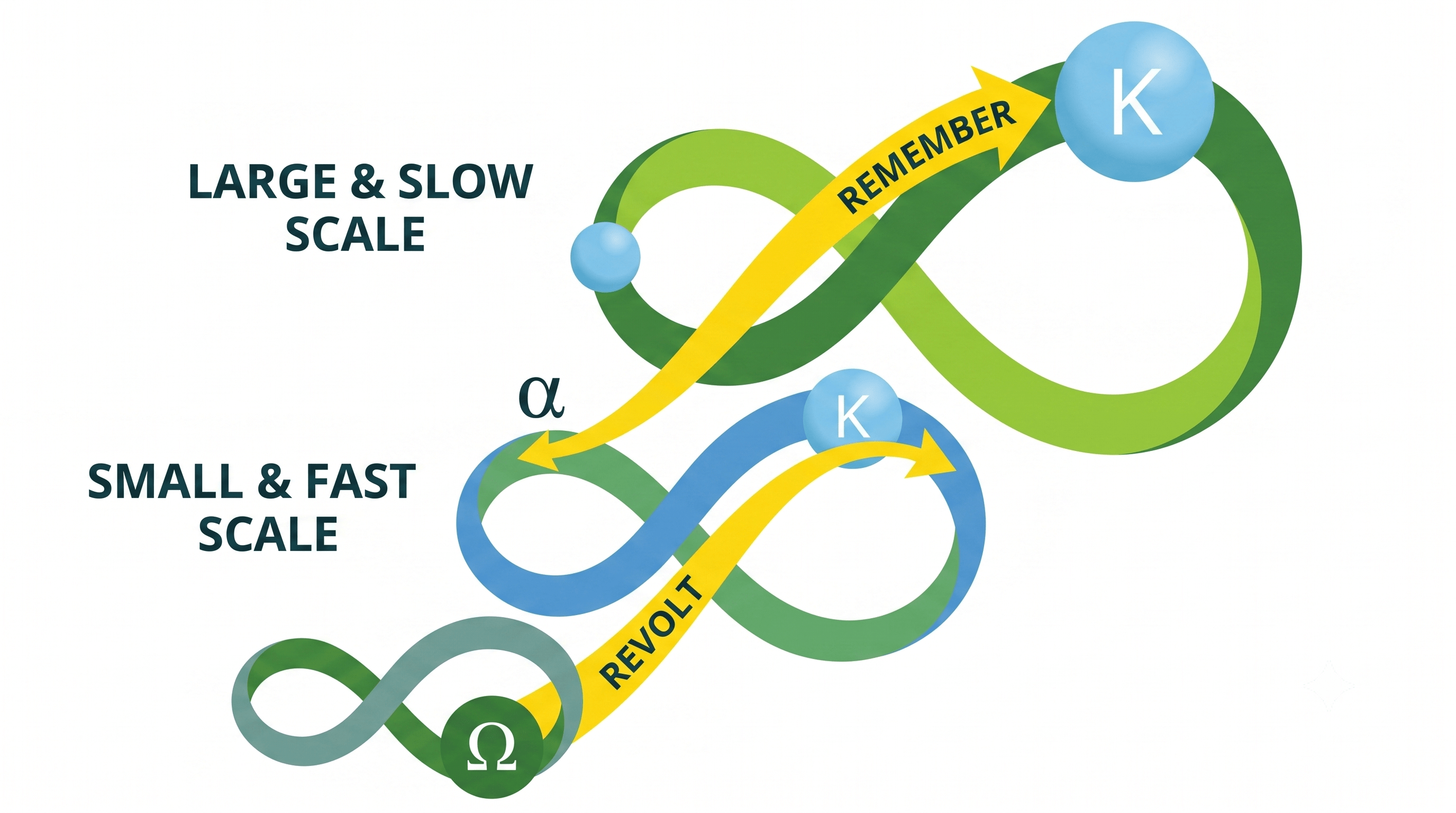
One model that can be usefulf in planning for seasons and recognizing the different qualities that each brings, is the Panarchy model, first proposed by C.S. Holling and colleagues. The model was first used to describe conservation work in ecological systems, but has since been expanded and applied to social-ecological systems. The model is described this way from the Reslience Alliance.
Panarchy is a framework of nature’s rules, hinted at by the name of the Greek god of nature- Pan – whose persona also evokes an image of unpredictable change. Since the essential focus of Panarchy is to rationalize the interplay between change and persistence, between the predictable and unpredictable, Holling et al. (2002) draw on the notion of hierarchies of influences between embedded scales, that is pan-archies, to represent structures that sustain experiments, test its results and allow adaptive evolution.
What’s notable is that this model speaks about two things that are often missed in seasonal complexity: scale and memory. Memory comes from the experience of a season and knowing what worked, didn’t work well, or what was unusual or atypical. Memory, designed in, comes from the evaluative inquiry and reflection of what happens when we go through seasons.
As the often quoted phrase tells us: those who forget history are doomed to repeat it.
Scale means that what might happen at a lower scale (e.g., quieter season in a clinic) may not translate upward. Or, lessons from the busy seasons may or may not translate downward. What panarchy does, is help us remember that we can learn from different scales if we have the right information. It also tells us that there are times when systems undergo different phase transitions. As you can see from the model below, panarchy doesn’t assume living systems undergo un-ending growth. Like seasons, there is a time for growth, conservation (relative stability), decay and release, and reorganization. Design activities — that creative, generative and focused set of making things — are better suited to certain stages than others. Maintaining or stabilizing are activities that can be designed for other seasons.

Designing with seasons in mind requires systems thinking and strategic design principles. What it yields, is something that is suited to living systems, not to what we think of on an org chart.
For working parents, this might mean that we design their work and supports to fit the seasons of their families, their children, and their communities, not just their jobs. The same applies to our health systems. Imagine what that might look like if we did this?