
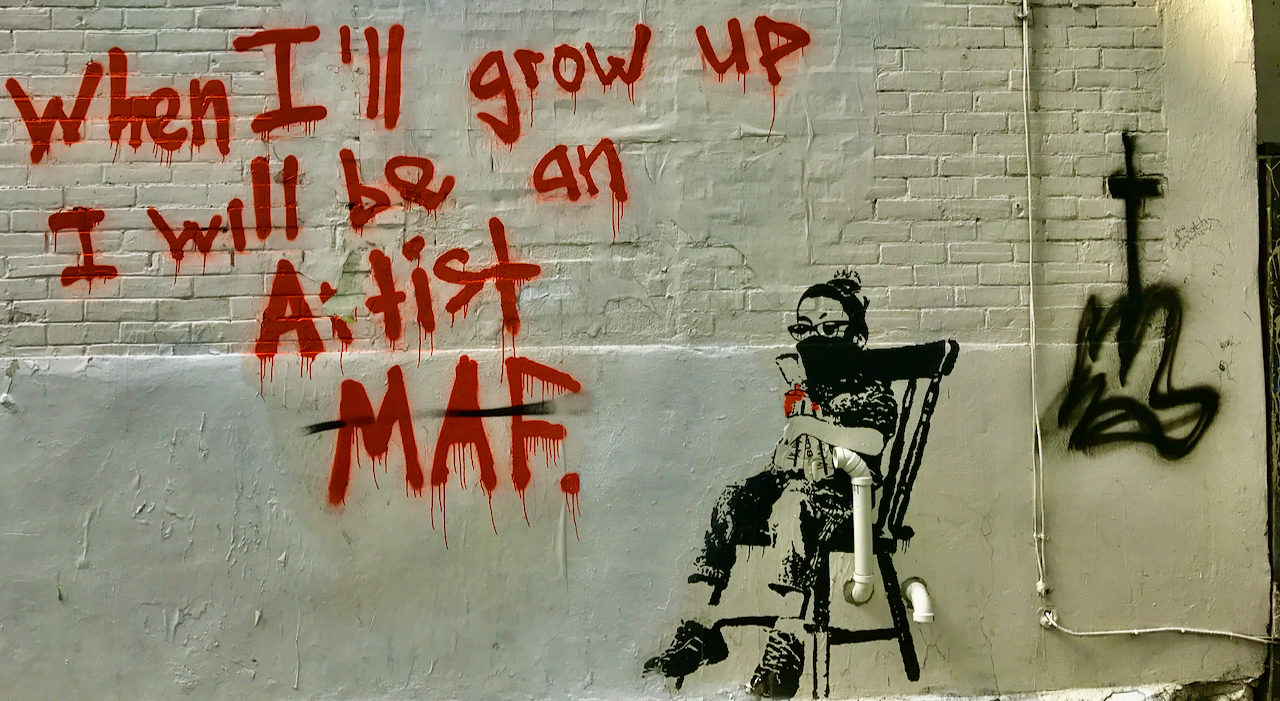
Art is an expression of our ideas into forms that are meant to provoke. Design is what transforms that provocation into service.
Both are exercises in balancing freedom with constraints.
I’m writing this having just watched a disturbing YouTube investigation into the role of AI-generated copies and publishing by the educational entertainment channel Fern. Fern blends investigative journalism with statistics-laden, data-driven, education into documentary-style YouTube videos, which are seen by millions. They carefully expose and illustrate how unscrupulous actors are basically stealing, copying, and manipulating their own content to serve their financial needs, while generating videos that are either misleading, highly incomplete, or outright false in their claims.
It’s one example of how AI-driven technologies coupled with behavioural design and a passing familiarity with product psychology can take the power of someone’s creative work and repurpose it for situations it never was intended. Alas, the Fern documentary was just one of dozens I’ve seen in recent months that are looking at how the power of technology combined with fear and the desire to make money has powered an entire marketplace based on deception, theft, and greed.
It’s also all about the production of content that lacks in nearly any true creativity.
To Create Is Human (?)
When we insert a prompt or set of directions to an AI tool, we are enlisting creation, but are we creating? I don’t think so. Yes, we are creating something, but we aren’t really acting as creators. And yes, there are artists who use AI in their work that is creative in nature, but that’s not what I’m writing about. I’m interested in when art and the creative act is subsumed under algorithmic control and what it means to create.
We are losing our ability to perceive, to judge, to discern, and both identify and express taste through our own actions. That is what creation does. It forces us, through the physics of making things — from seeing situations to envisioning solutions to crafting products and then putting them into the world — into an attentiveness and related learning that cannot be done through passive consumption of content.
I argue that our creation process is part of what makes us human. We create with intention, goals, and desires in ways that other animals — and certainly technologies — do not. Whether that’s something that you value or not, the fact is that creation is part of what distinguishes us. It’s also how we construct and express our identity, and that is part of what it means to be human.
We are our identities. And we are able to create and construct our identities as we see fit.
That’s a profound skill. It’s also manifest through our families, friendship networks, discovery communities, and organizations. The ability to shape, share, express, and co-construct identity is profound.
To do this, we need to be able to create. It also means that we must allow ourselves the freedom to do so. Why wait? Why delay?
Why offload our creative impulses to AI?
When we do that, we ship parts of our identity as much as our talent to an algorithm owned by a corporation that has been designed to make money off of you not creating by this offloading.
Resist. Create. Make mistakes. Design.
By human. Keep the freedom.