Travelling offers up some of the clearest examples of how complexity, connection, and coordination intersect.
Consider how many relationships, represented in networks, embodied practices, and individual nodes (people, transactions, units) are involved in a flight from one place to another. It’s an amazing feat when you think of how often things go relatively smoothly and straightforward, despite the many things that are going on and can happen.
What I love about using the travel example is that it represents one of the most difficult aspects of complexity and systems, which is the fact that many complex systems have within them elements of simplicity, complicated arrangements, and chaos alongside those that are complex. If we look at the Cynefin Framework, we will see how each of the quadrants that represent the different forms of organizing within a system and how travel can bring all of them to bear in the same journey.
Note the Cynefin Framework below.

Travel Complexity
When we look at air travel, we can see many layered systems at play.
There are elements of mechanical systems that are straightforward, multifaceted and complicated, but open to being predictable such as the aircraft, the travellators, and the signage, operating alongside simple, predictable systems like seating or carting your luggage (versus the luggage handling process, which is arguably complicated, complex or chaotic depending on whether you get your luggage).
Add in to this, the more complex systems such as aspects of air traffic control, weather patterns, human behaviour (who’s on time? who’s paying attention? Did everyone show up for work today?).
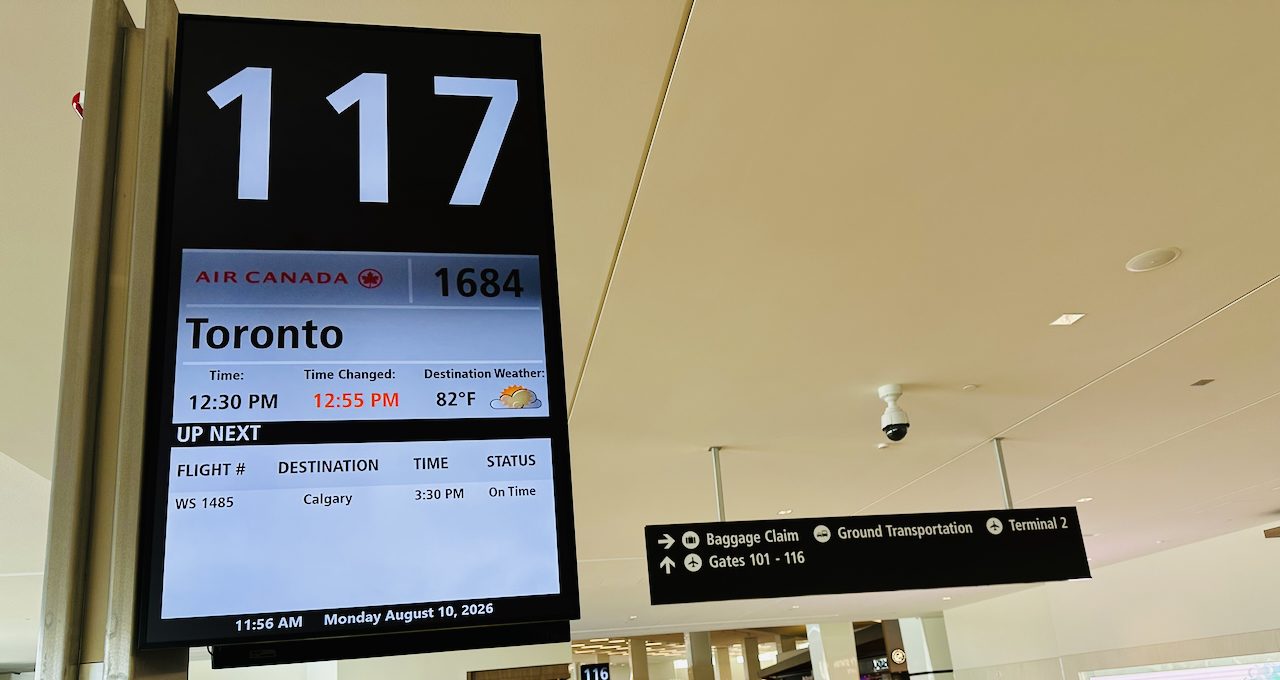
Yet, things (mostly) get done much of the time. Some flights travel thousands of kilometres or miles and get people to their destination right on time, along with the baggage and cargo in good condition. Some flights (like the one I took yesterday) are a little delayed, while others are postponed or outright cancelled, throwing plans into chaos for those at both ends of the flight path (and rippling through the system to all of those missed connections and future destinations).
All of these systems exist simultaneously. This overlap and intersection of systems is what can make complexity so challenging to deal with. It’s why saying a system is complex can mean many things. We hear that complex systems can’t be predicted reliably and that they aren’t amenable to control or might be resistant to design. But there are many things that might be undertaken within that system as part of non-complex components that can be. These systems are layered.
Most human-engaged systems are multilayered. There is complexity, there is complicated aspects, and there are elements of simplicity.
Complexity Takes Flight
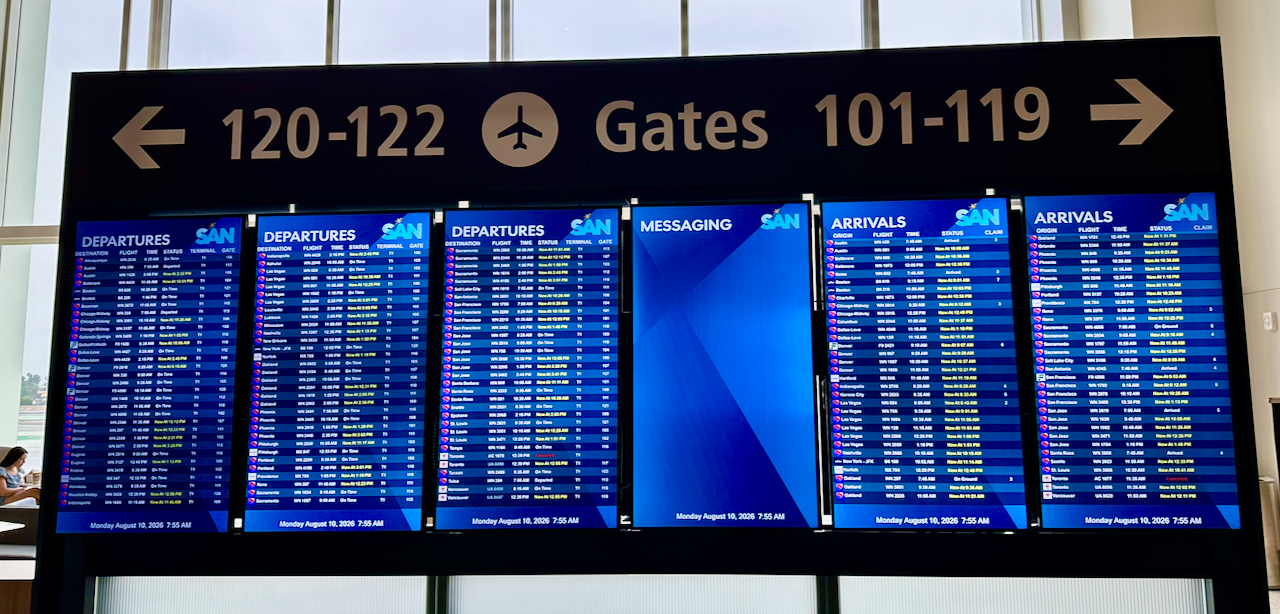
It may be useful thinking of your system like an airport to use as a means to tease out some of the overlapping systems in which you’re working, revealing these layers.
This can aid you in efforts to identify where the complexity lies, and how to plan and adapt your designs within the layered systems of complication in operations and relationships. Rather than design for things as if it was all straightforward and predictable, we can do better when we understand what kind of relations we have going on before us.
All you need to do is look at those airlines or other services along a journey that design for disruption and adaptation to see how this works.
There are times when “stuff happens” along the journey and you’re left feeling abandoned, ignored, frustrated and angry. And there’s times when someone or some organization inspires a feeling of being cared about and cared for, even if what’s going on isn’t desirable. An organization that’s aware of the multi-layered effects and relations within a complex system might know it can’t fix everything, but that there are specific things it can by understanding what can be controlled. This is what an organization attuned to the layered complexity within a system can do.
Thankfully, I didn’t need to worry about any of that on my recent journey, but spending time at the airport reminded me of all the interactions and relationships along the way where it could have gone worse (or better) when understood through the lens of systems thinking about complexity and better design.
For more on applying a complexity, systems, and network perpective on your designs, visit www.cense.ca